


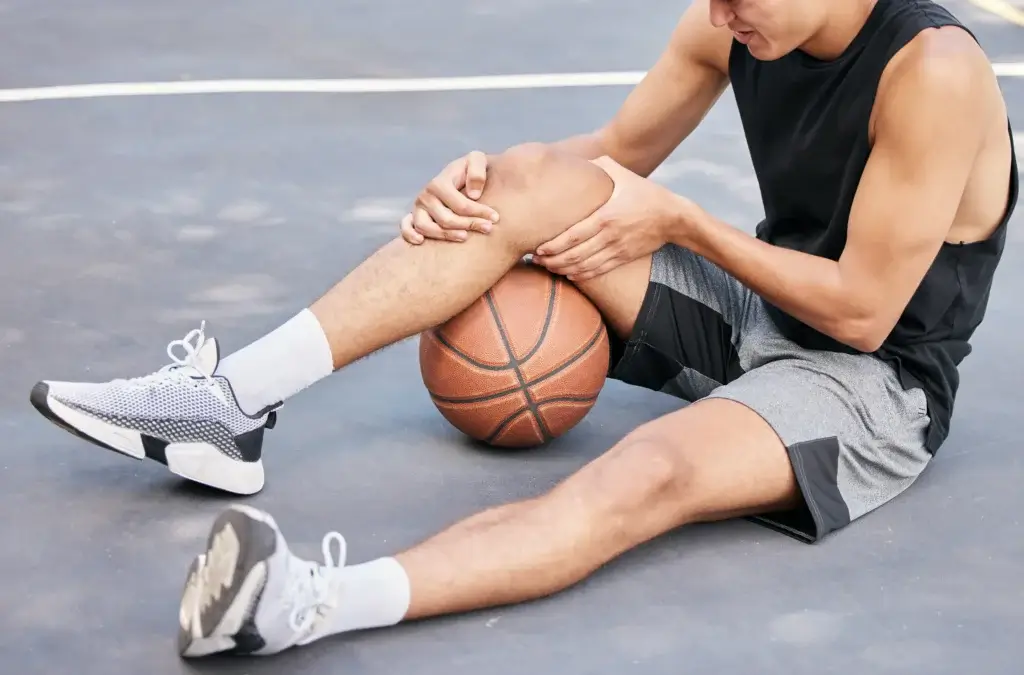
Strong Knees, Stronger Performance
What You Need to Know About Sports-Related Knee Injuries
Whether you’re pivoting on the soccer field or training for your next 5K, your knees are a key part of your performance. They absorb impact, provide stability, and help generate the power needed for nearly every athletic movement.
It shouldn’t come as a surprise, then, that knees are one of the most commonly injured joints in sports, but those injuries generally respond well to targeted rehabilitation. At Professional Care, our physical therapists, occupational therapists, and sports performance specialists work together to help athletes recover safely, restore confidence, and return to the activities they love.
Why Are Sports Injuries So Common in the Knee?
The knee connects the thigh bone to the shin bone, while the kneecap helps the muscles on the front of the thigh produce powerful movements. And since it’s a weight-bearing joint, the knee relies on several structures working together to help keep it stable:
- Ligaments, which connect bones and prevent excessive movement.
- Menisci, two pieces of cartilage that act as shock absorbers.
- Tendons, which attach muscles to bones and transfer force.
- Muscles surrounding the hip, thigh, and calf that help control movement.
Unfortunately, the high-impact movements in sports challenge all of these structures. Quick changes in direction, jumping, landing, sprinting, twisting, and sudden stops place large forces on the knee. Furthermore, repetitive training can also overload tissues if they are not given enough time to recover.
Let’s take a look at three knee injuries common among athletes (as well as what Professional Care can do to treat them).
A Closer Look at Common Sports-Related Knee Injuries
ACL Tears
If you’re an athlete, this is probably the first knee injury that comes to mind. The ACL is one of the primary stabilizing ligaments inside the knee. It keeps the shin bone from sliding too far forward and helps control sharp, twisting movements. Several sports movements can cause it to tear, including:
- Jumping and landing
- Cutting or pivoting
- Sudden stops
- Direct contact
In some cases, you might need surgery to fully repair the ACL, although not always. Either way, physical therapy focuses on restoring knee motion, reducing swelling, rebuilding strength, and improving balance and coordination. As healing progresses, sports performance training helps you safely regain speed, agility, jumping ability, and movement quality before returning to competition.
If daily activities become difficult during recovery, occupational therapy can provide practical strategies to improve independence while protecting the healing knee.
Meniscus Tears
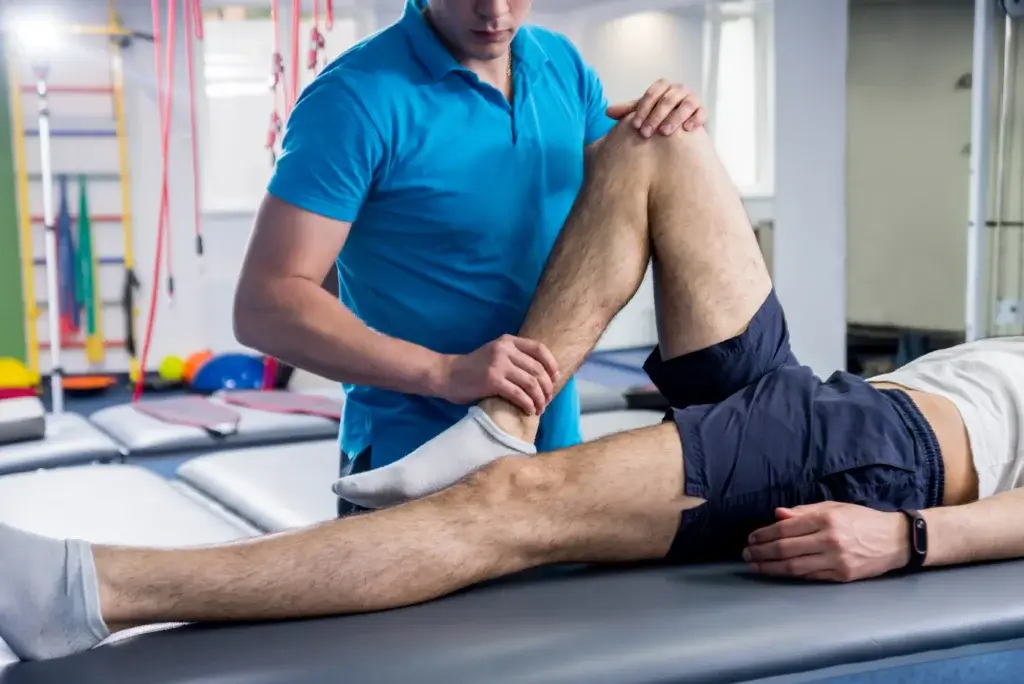
The meniscus is a C-shaped piece of cartilage that cushions the knee and helps distribute forces during movement. A tear may occur after a twisting motion, especially when the foot stays planted while the body rotates. However, it can also develop gradually from repeated stress during training and competition.
Fortunately, most meniscus injuries respond well to conservative treatment. Our physical therapists will guide you through progressive strengthening, mobility exercises, balance training, and movement retraining to improve knee stability and reduce stress on the injured cartilage. Our sports performance specialists then help you rebuild explosive strength and proper mechanics before returning to higher-level activities.
Jumper’s Knee
Not all sports knee injuries occur suddenly. Some build gradually over time, such as jumper’s knee, also known as patellar tendinopathy. It occurs when the tendon connecting the kneecap to the shin bone becomes irritated, usually due to repeated jumping, sprinting, or rapid acceleration and deceleration.
Treatment focuses on gradually building the tendon’s ability to tolerate load rather than simply resting the knee. At Professional Care, this usually involved progressive strengthening exercises, including eccentric loading, which refers to slow, controlled muscle-lengthening exercises. We might also perform a detailed movement analysis to improve your landing mechanics and provide training modifications that help ensure your legs absorb force safely while your tissue heals.
Helping You Return Stronger After a Knee Injury
Rehabilitating after a sports injury can be difficult, but Professional Care’s blend of physical therapy, occupational therapy, and sports performance training allows us to provide truly comprehensive care.
So don’t let a knee injury keep you on the sidelines! Contact our clinic today to schedule an evaluation and start building a safe, confident return to the activities you enjoy.
Let’s Get You Better ASAP!
Athlete Spotlight:
Denise Cardello — Strength, Resilience, and the Pursuit of Excellence

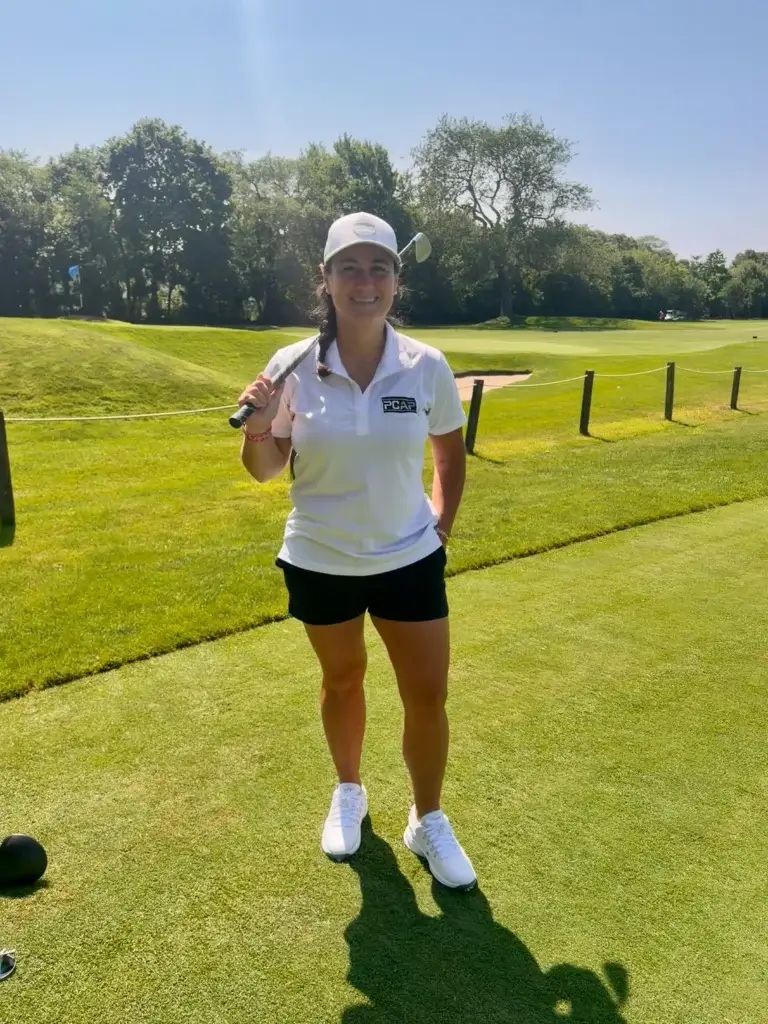
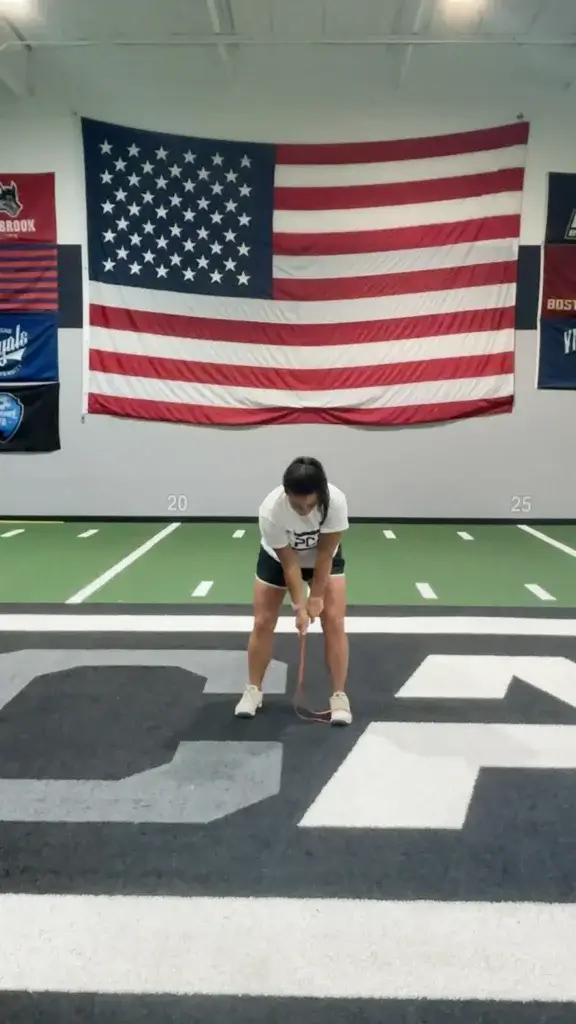
Denise Cardello of Babylon, Long Island has always been driven by competition and athleticism. Her lifelong commitment to sports began at a very early age playing travel softball and soccer. Then at the age of 14, Denise discovered the intriguing sport of ice hockey through a school friend. That passion carried her to Castleton State in Vermont, where she was recruited to play collegiate ice hockey and later graduated in 2011. Denise continued competing in hockey leagues after college and eventually expanded her athletic career into professional women’s ice hockey.
Never one to shy away from a challenge, Denise picked up golf only three years ago while playing casually with friends. She quickly fell in love with the sport’s difficulty and decided to pursue it at a higher level. Today, she competes as part of the LPGA Amateurs – Long Island Chapter, entering her first competitive season in 2025.
Denise’s journey led her to Professional Care Athletic Performance (PCAP) in Islip in the summer of 2025, after searching online for a specialized training facility. She immediately connected with our performance team and began structured training to elevate her strength, power, stability, and mobility.
At the same time, Denise was battling a severe case of tennis elbow that had persisted for nearly a year. She began physical therapy with Islip Clinical Director Liz Powers and physical therapist Sarah Panzarella, working diligently to overcome the injury while continuing her athletic development.
A competitor her entire life, Denise embodies resilience and determination. She continues to train at PCAP as she pushes toward new goals in golf and beyond — proving that with the right support, athletes can keep rising to the next level.

“Golf is one of the few sports where you’re constantly challenged by both the course and yourself. It has taught me more about myself than any other sport. It’s about showing up, putting in the work, trusting the process, and striving to get better every day.”
Denise Cardello, PCAP Athlete
No Referral? No Problem!
Did you know we can see you for Occupational &
Physical Therapy with or without a referral from a doctor?
Call us today for more information!
Bridging the Gap Between Rehab and Game Day
At Professional Care, one of the things we pride ourselves on is our ability to guide athletes through every step of the rehabilitation process, from the early stages of pain and swelling management to a robust return-to-sport program. And one of the pillars of our approach is our Athlete Bridge Program.
Connecting Sports Rehab to Sports Performance
Our Athlete Bridge Program provides a structured transition between rehabilitation and full return to sport. Our physical therapists and sports performance specialists join forces to bridge the gap between completing a physical therapy rehab program and sports performance training, helping ensure a safe, efficient return to sport.

The program begins with a comprehensive movement assessment that evaluates your current abilities in key areas, including strength, range of motion, movement quality, and more. From there, we’ll create a tailored program that might include:
- Sport-specific strength training
- Agility and change-of-direction drills
- Speed development
- Jumping and landing mechanics
- Balance and coordination exercises
- Injury prevention strategies
Throughout the process, we use several high-tech tools, including force plates, sprint analysis, and strength-testing equipment, to provide objective measurements that help our team identify remaining weaknesses and monitor progress over time.
Creating A Supportive Environment
One unique element of our Bridge Program is that we place participants in small groups based on injury type and recovery stage. Each group works closely with both a sports performance specialist and a physical therapist, an approach that fosters a supportive training environment where you always feel like someone has your back.
Ready to Bridge the Gap?
If you’re recovering from a sports injury and want to make the transition back to competition with confidence, click below to learn more about the Athlete Bridge Program and how it might benefit you.