
Celebrating Independence: How Occupational Therapy Empowers Everyday Lives
Let’s Clear Up Some Common Misconceptions
At ProCare Occupational Therapy, we find that people often don’t have a clear understanding of occupational therapy. Often, they confuse it with physical therapy. Other times, they might assume it’s something related to workplace injuries or job-related training. Unfortunately, both of these assumptions miss the mark.
With April being National Occupational Therapy Month, we want to take some time to clear up myths about OT.
Occupational Therapy: Separating Fact from Fiction
Myth #1: Occupational Therapy is Only for Work-Related Injuries
Let’s kick things off with one of the most common myths out there: that the “occupational” in “occupational therapy” refers to work. In actuality, “occupation” here refers to the meaningful activities that occupy your day, such as:
- Dressing and bathing
- Cooking and eating
- Driving
- Caring for children
- Sports and hobbies
OT helps people regain these skills after surgery, illness, injury, or neurological conditions. Every plan is tailored to your needs and may include:
- Task-specific training to rebuild everyday skills
- Adaptive techniques to conserve energy and reduce strain
- Home or workplace modifications for safety and independence
- Custom splinting for hand and upper extremity injuries
- Cognitive retraining for memory, attention, or problem-solving challenges
In short, occupational therapy bridges the gap between medical recovery and daily living.
Myth #2: Occupational Therapy is the Same as Physical Therapy
It’s true that OT and PT often work side by side, including here at Professional Care. But they focus on different goals:
- Physical therapy centers on restoring strength, mobility, balance, and pain control.
- Occupational therapy focuses on how those physical gains translate into everyday function.
These goals absolutely play off each other, however. For example, let’s say you’ve undergone shoulder surgery. Physical therapy will help restore overall strength and range of motion in your rotator cuff and upper back. Once you’ve built those foundational skills, occupational therapy can help you return to your daily activities such as bathing, dressing, and cooking.
Myth #3: Occupational Therapy is Only For People with Serious Disabilities
OT can absolutely help people living with lifelong conditions that affect ability, such as cerebral palsy or multiple sclerosis. However, occupational therapy also helps people with everyday orthopedic and functional concerns, particularly those that affect the hands.
At ProCare Occupational Therapy, our certified hand therapists often help people manage the following conditions:
- Hand or wrist injuries
- Tendonitis
- Carpal tunnel syndrome
- Arthritis
- Post-surgical stiffness
- Sports-related upper extremity injuries
Even small limitations can cause major disruptions, and our team will help you address these challenges with targeted, evidence-based strategies, such as custom splinting or fine-motor retraining.
Ultimately, OT is about function. If pain, weakness, stiffness, or coordination issues are interfering with what you need or want to do, occupational therapy may help, regardless of how serious the diagnosis sounds.
Myth #4: Occupational Therapy is Just Light Exercise
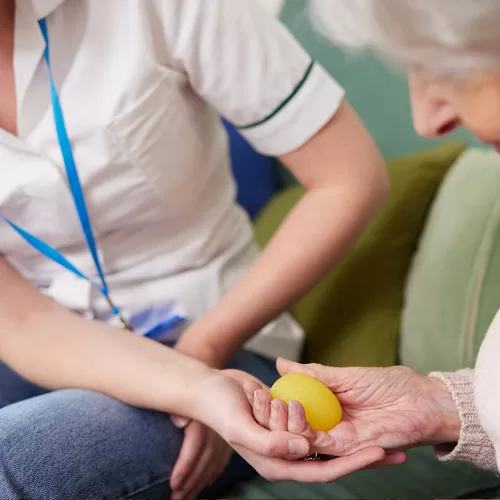
Occupational therapy is often misunderstood as consisting of simple stretching or basic movements. In reality, it is structured, evidence-based rehabilitation focused on restoring meaningful function. Sometimes, exercise is part of the treatment, but the purpose goes far beyond movement for movement’s sake.
Depending on your diagnosis, OT may involve:
• Manual therapy to improve joint mobility
• Therapeutic exercise to rebuild strength and endurance
• Motor relearning techniques to restore coordinated movement after brain injury
• Splint fabrication to protect healing tissues or improve alignment
• Desensitization therapy to reduce nerve sensitivity after injury
• Activity grading, which gradually increases task difficulty to build tolerance
Each session is purposeful. We select activities because they relate directly to real-life tasks, whether that is gripping a golf club, preparing meals, returning to work duties, or managing self-care independently.
Discover the Benefits of Occupational Therapy for Yourself
Occupational therapy helps translate medical progress into meaningful daily success, no matter your goals. At ProCare Occupational Therapy, our OTs and PTs collaborate to deliver individualized care in a supportive environment, helping you move and function better and return to the activities that matter most.
Collaborative Care in Action: Dr. Messina Shares His Expertise
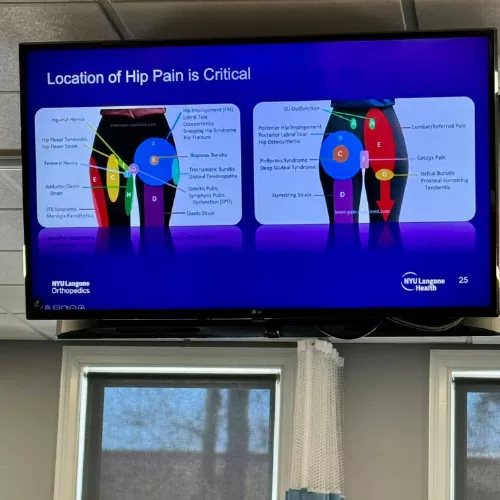
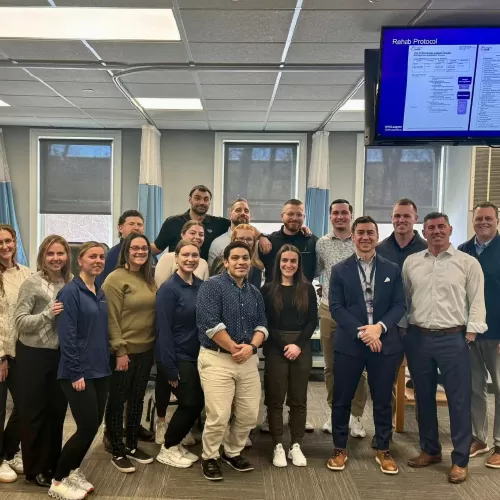
We were delighted to welcome Dr. James Messina, sports orthopedic surgeon at NYU Langone, for an enlightening lecture on Femoroacetabular Impingement (FAI) and hip pain at our East Patchogue clinic.
Dr. Messina specializes in sports medicine and is committed to helping patients of all ages reclaim their active lifestyles.
We are truly appreciative of Dr. Messina’s valuable time, expertise, and partnership in our mission to deliver exceptional care to our patients. For more information about Dr. Messina, the conditions he treats, and the care that he provides, please visit below:


Healthy Recipe: Spring Asparagus Risotto
Ingredients
- 4 cups (1-inch) sliced asparagus (about 1 1/2 pounds), divided
- 3 cups fat-free, low-sodium chicken broth
- 1 1/2 cups water
- 1 tbsp butter
- 2 cups chopped onion (about 1 large)
- 2 cups uncooked Arborio or other medium-grain rice
- 1/2 cup dry white wine
- 1 cup (4 ounces) grated fresh Parmigiano-Reggiano cheese, divided
- 1/4 cup heavy whipping cream
- 1 tsp salt
- 1/2 tsp freshly ground black pepper
Directions:
Place 1 cup asparagus and 1 cup broth in a blender; puree until smooth. Combine puree, remaining 2 cups broth, and 1 1/2 cups water in a medium saucepan; bring to a simmer (do not boil). Keep warm over low heat. Melt butter in a large heavy saucepan over medium heat. Add onion to pan; cook 8 minutes or until tender, stirring occasionally. Stir in rice; cook 1 minute, stirring constantly. Stir in wine; cook 2 minutes or until liquid is nearly absorbed, stirring constantly. Add 1/2 cup broth mixture; cook 2 minutes or until the liquid is nearly absorbed, stirring constantly. Add remaining puree mixture, 1/2 cup at a time, stirring constantly until each portion of broth is absorbed before adding the next (about 30 minutes total). Stir in remaining 3 cups asparagus; cook 2 minutes. Stir in 3/4 cup cheese, cream, salt, and pepper. Transfer risotto to a bowl. Serve with remaining 1/4 cup cheese.


A New Title For Melissa Durant, MS, OTR/L, CHT
Congratulations are in order for Melissa Durant on her promotion to Clinical Director of ProCare Occupational Therapy, East Patchogue!
This well-deserved advancement recognizes Melissa as an indispensable member of our Occupational Therapy and Hand Therapy team. She consistently goes above and beyond, and her hard work, dedication, and passion for her career have profoundly impacted the lives of our patients.
Congratulations, Melissa! We can’t wait to see you excel in this new role!

5 Health Benefits of Spring Cleaning!
1. Allergy Symptom Reduction. A thorough cleaning can greatly reduce the amount of dust in your home, which is helpful considering dust mite allergies are the number one cause of bronchial asthma in the world. About 2.3 million Americans have been diagnosed with asthma. A 2014 study found that cleaning and decluttering your home can help you avoid allergy symptoms and make you feel healthier.
2. Cleanliness Produces Happiness. Maybe you don’t enjoy the process of cleaning, but the end result will leave you smiling. A 2010 study found that having a clean home can improve your mood and reduce your risk of depression. Studies also show that doing housework for 20 minutes can reduce stress and anxiety by up to 20 percent.
3. Better Heart Health. If you’re looking for an easy way to support your heart health, just 30 minutes per day of light exercise (including low-intensity physical activities like household chores, vacuuming, mopping, and scrubbing floors) can decrease your risk of heart disease by 24 percent.
4. Declutter and Do a Good Deed by Donating. An essential part of a successful spring cleaning is getting rid of old items that are no longer used or worn. Apply the rule of thumb that if you haven’t made use of something in a year, it’s time for it to go. Fill bags and boxes of things, then donate them to a local charity so they can still be beneficial to someone else. Giving to others is an act that is associated with greater self-esteem, lower stress levels, and overall happiness.
5. Get a Better Night’s Sleep. Do you have trouble sleeping at night? In a recent poll, it was found that people who make their beds are 19 percent more likely to sleep well on a regular basis. Clean sheets with a fresh scent impacted 75 percent of those individuals polled. See what a difference spring cleaning can make by cleaning the clutter from your room and sleeping on some fresh sheets.

No Referral? No Problem!
Did you know we can see you for Occupational &
Physical Therapy with or without a referral from a doctor?
Call us today for more information!
Let’s Get You Better ASAP!