
Five Simple Tips for Improving Your Balance
Are you worried about falling and injuring yourself? Does limited mobility due to arthritis or another condition make you feel shaky? Balance challenges can certainly be difficult, but you do have options for improving your overall balance and stability!
One of the things we do at Professional Care Physical Therapy is help people work on the spatial awareness and muscular strength crucial in addressing balance challenges. Our ProCare Occupational Therapy team also helps people build safer routines for daily activities such as bathing, cooking, and getting dressed. This is especially true for people with a high risk of falling.
Why Should I Work on My Balance At All?
The older you get, the more important good balance becomes. Falls are one of the biggest threats to adults 65 years or older.
While several factors contribute to this high fall risk–including age-related sensory and physical changes–you can do things to lessen your risk, and it’s never too early to get started! If you start working to improve your balance now, you’ll be in a better place as you age.
That said, there are other benefits to improving balance for younger people. A good sense of balance has a radiating effect on your overall fitness, helping to improve your posture and overall movement. You’ll be better able to catch yourself if you stumble or trip, and you might notice improvements in other physical activities. For athletes, better balance often supports faster direction changes, cleaner landings, and fewer ankle sprains.
How Can I Improve My Balance? Five Suggestions from Our Physical Therapists
-
Go for a Walk: Sometimes, the best solutions are the simplest. Walking helps build core and lower-body strength, two crucial components of good balance, and it’s safe and effective for most people. That said, if you’re struggling with balance, it’s important to speak to your physical therapist first–you might benefit from initial balance training or using a mobility aid during your walks. A physical therapist may recommend starting in a controlled environment such as an indoor track or a treadmill with handrails.
-
Restore Your Mobility: Stiff or arthritic joints can negatively impact your balance. Our physical therapists can teach you how to restore or improve your mobility and guide you on a safe routine you can perform at home that targets your individual needs.
-
Target Your Core: If you’re really struggling with balance and instability, it may be time to focus on dedicated core exercises. Your core refers to the muscles that wrap around your spine–your back, hip, glute, and ab muscles. They keep your spine stabilized, which in turn helps you keep your balance. For athletes, core control also supports sprint mechanics, change of direction, and efficient force transfer through the trunk. Not sure where to start with core strengthening? Our physical therapists can show you which exercises will work best for you.
-
Challenge Your Balance: As with any other aspect of fitness, spending time on dedicated balance training can help you see results. Your goal is to find exercises that challenge your sense of balance without putting you at risk of falling–again, this is something our PTs can help with.
-
Assess Your Balance: If you want to get serious about improving your balance, schedule an appointment at Professional Care to have your balance assessed by one of our experts. We’ll run several balance screens to help us pinpoint the exact reason for your balance challenges–it may even be something you didn’t expect, such as inner ear issues. With a balance assessment, we can help you target your treatment to suit your exact needs.
When daily tasks contribute to fall risk, our occupational therapy team can also screen how your home setup, footwear habits, and task routines affect stability. If hand or wrist pain limits safe gripping on railings, one of our Certified Hand Therapists can address grip strength, joint protection strategies, and supportive bracing options when appropriate.
Afraid You’ll Lose Your Footing? We’ve Got Your Back
The physical therapists at Professional Care Physical Therapy & Rehabilitation specialize in movement and exercise. If you visit us for a balance assessment, we can design a customized treatment program that addresses your needs and abilities. For example…
-
Dealing with persistent pain that makes walking difficult? We can guide you through a drug-free pain management program.
-
Find most core exercises impossible? You’re not alone. Although activities like core planks have significant benefits, many beginners need to build up to them. We’ll show you core exercises that you can actually perform.
-
Not sure how to challenge your balance? We’ll guide you through a progress balance training program, measuring your progress and increasing intensity as you go.
Don’t miss out on the benefits of good balance. Call us to request your balance assessment today!
Sources: https://www.cdc.gov/falls/facts.html, ttps://www.physio-pedia.com/Balance_Training
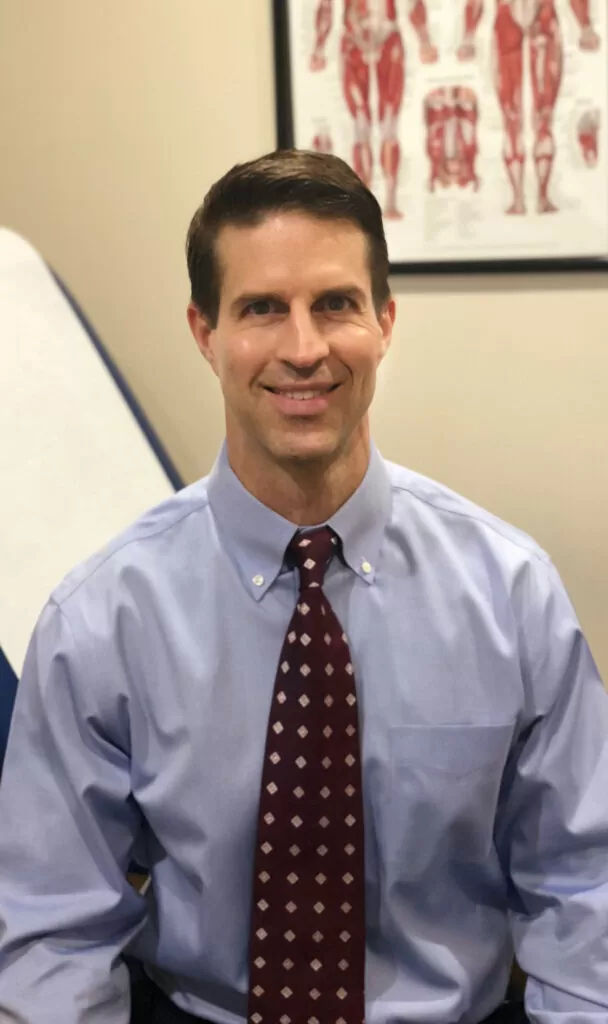
Dr. Dan Anderson, PT, DPT, Clinical Director, Celebrates 10 Years with Professional Care Physical Therapy and Rehabilitation!
This month, we are thrilled to commemorate a significant milestone: 10 years with our exceptional Physical Therapist and Clinical Director, Dr. Dan Anderson. Over the past decade, Dr. Anderson has played a vital role in assisting countless individuals in regaining function, managing chronic pain, and reaching their wellness goals—whether through post-operative recovery or by enhancing everyday movement and mobility.
Throughout his time with Professional Care, Dr. Anderson’s passion for helping others and his unwavering commitment to his profession have made a lasting impact on both patients and colleagues alike. His dedication, leadership, and thoughtful approach to care are genuinely inspiring.
Thank you, Dr. Dan Anderson, for your wisdom, compassion, and continued dedication to your craft. We at Professional Care feel incredibly fortunate to have you on our team and look forward to many more years of working together.
Balance and Falls Safety Tips for Active Older Adults
by Jaclyn Rauchfuss PTA, Community Education Liaison
Falls are a leading cause of broken bones and traumatic brain injuries in older adults. The risk is even higher for those on medications such as blood thinners, as injuries—especially head injuries—can be more serious. If you do fall, contact your doctor right away.
Falls commonly happen when getting in or out of a chair, while walking or turning when distracted, and in the bathroom or shower. Common risk factors include leg weakness, balance or walking difficulties, certain medications, vision problems, poor footwear, and home hazards like uneven steps, throw rugs, clutter, or toys. Many people who fall become afraid of falling again, even without serious injury. This fear can lead to less activity, weakness, depression, and social isolation over time.
How to Reduce Your Risk in Your Home
Make your home safer with:
- Good bright lighting, especially in hallways and stairways, and use nightlights as needed.
- Install and secure handrails and grab bars in the bathroom near toilets and in showers/tubs.
- Remove throw rugs and ensure carpets are secure.
- Remove all clutter from walkways.
- Avoid using step-stools.
Make sure to inform your healthcare provider if you have experienced a fall or feel unsteady on your feet. Additionally, let them know if your medications lead to dizziness or drowsiness.
Maintaining an active lifestyle through exercise or physical therapy can enhance your strength and balance. It’s also important to have your vision checked annually to ensure your glasses are up to date. Remember, small adjustments can significantly impact your safety, activity level, and independence.

What Does Balance Training Look Like?
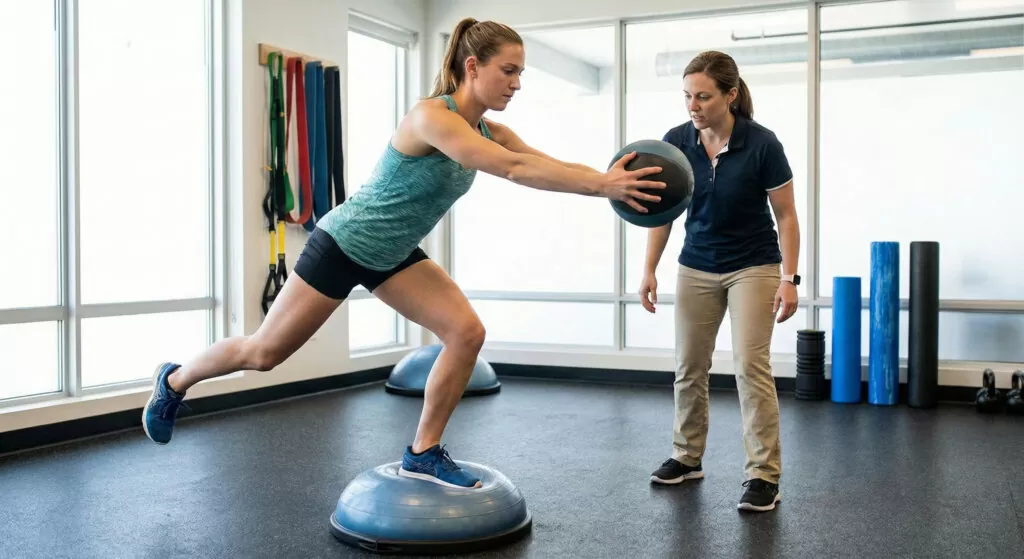
Balance training looks different for each person because balance problems come from different causes. Your physical therapist starts by watching how you stand, walk, turn, and recover from small stumbles. Next, they’ll check ankle and hip mobility, leg strength, reaction time, and how well you sense joint position. These factors often explain why you feel unsteady.
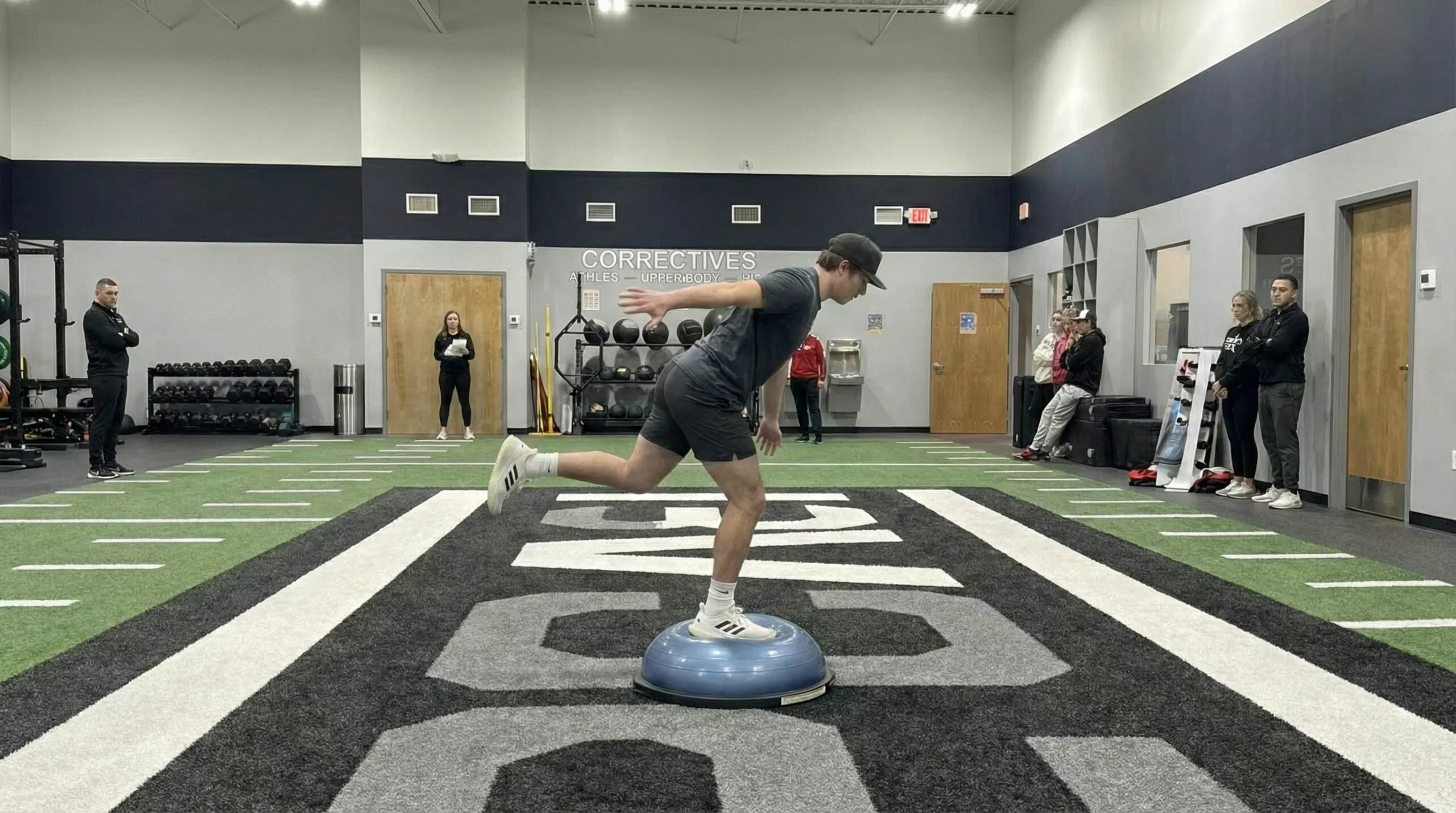
Most plans start in a safe, controlled setup. You might practice weight shifts, steady standing with a narrower stance, or stepping drills that teach your body to catch itself. Your therapist then increases the challenge by changing the surface, adding head turns, or asking you to reach while you stay stable. The goal is to improve control, not to push you into a risky situation.
Occupational therapy supports the same goal through daily tasks. An occupational therapist helps you practice safer transfers, improve balance during dressing and bathing, and adjust habits that increase fall risk. For athletes, balance training often includes single-leg control, landing mechanics, and change-of-direction drills. These skills help reduce ankle sprains and improve performance when speed increases.
If you feel unsteady, schedule a balance assessment at Professional Care. Our multidisciplinary team will identify what is driving your balance issues and build a clear plan to help you move with more confidence!
Successful Injury Prevention Workshop for Baseball and Softball Athletes!
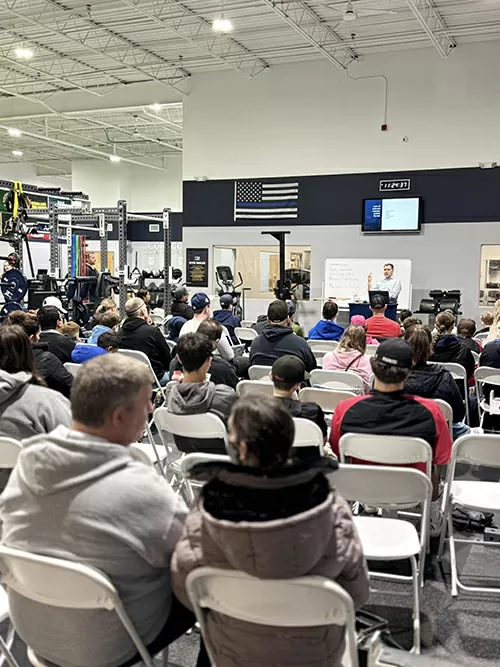
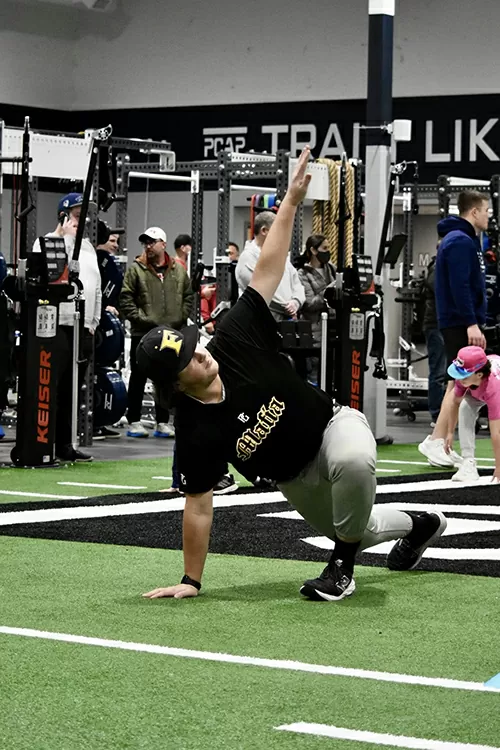
We had a wonderful turnout on January 10th for our Injury Prevention Workshop, specifically designed for baseball and softball athletes!
This year, we were honored to collaborate with Dr. Mark Grossman, who delivered an enlightening lecture to our participating athletes. Dr. Grossman is the Chief of Sports Medicine at NYU Langone Hospital, Long Island, and also serves as the head team physician for both LIU-Post and Adelphi University.
Our dedicated coaching and training team, led by Dr. Liz Powers, PT, DPT, OCS, CSCS, along with Jacob Carlock, FMS, ISSA CPT, and NFL Alumni, did an outstanding job once again in guiding our athletes. Throughout the event, each athlete received evaluations to identify those at a higher risk of injury, utilizing state-of-the-art technology and equipment. The data gathered will be shared with each athlete, offering invaluable insights for injury prevention and enhancing athletic performance.



No Referral? No Problem!
Did you know we can see you for Occupational &
Physical Therapy with or without a referral from a doctor?\
Call us today for more information!
Let’s Get You Better ASAP!
Don’t let pain dictate your life. Take the first step towards reclaiming your mobility and well-being with our expert support. Start your journey to a healthier you today.